
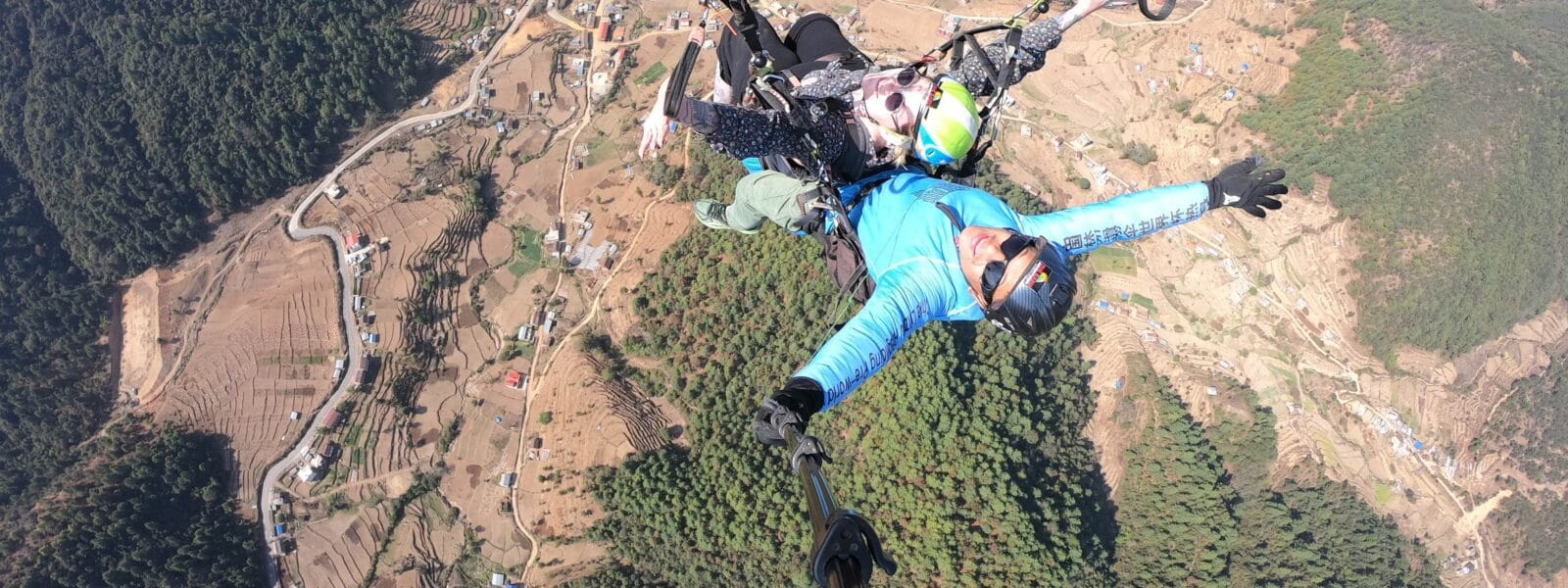
Planning to paraglide from Chandragiri to Chitlang? Timing is everything. While the route is available nearly year-round, some seasons and times of day offer better skies, longer airtime, and unbeatable Himalayan views.
In this guide, we break down the best time for paragliding in Kathmandu, including seasonal insights, wind patterns, visibility conditions, and smart booking tips to make the most of your sky adventure.
Best Season for Paragliding in Kathmandu
Autumn (October–November) – Peak Season
- Clear skies, crisp air, and stable thermals
- Perfect visibility of Langtang, Manaslu, Ganesh Himal, and Gaurishankar
- Moderate winds are ideal for smooth take-off and gliding
- Most reliable flight windows with minimal cancellations
Why it’s best: Ideal conditions + festive atmosphere (Dashain & Tihar)
Spring (March–May) – Wild & Wonderful
- Warm temperatures, blooming hillsides, and longer flight days
- Some haze in the lower valleys, but clear Himalayan views in the morning
- Popular among couples and backpackers
Tip: Book early morning slots (before 10:30 AM) for clearer skies
Winter (December–February) – Cold but Calm
- Fewer crowds and budget-friendly options
- Visibility is great, but cold wind can shorten flight duration
- Midday flights (10:30 AM–12 PM) are best due to warmer air
Note: Dress warmly — wind chill is stronger in the air
Monsoon (June–Mid September) – Not Recommended
- Frequent rain, thick clouds, and strong wind gusts
- Flight cancellations are common
- Limited visibility and muddy access trails
Verdict: Best to avoid unless weather unexpectedly clears
Best Time of Day to Fly
🕗 8:00 AM – 10:30 AM – Perfect Conditions
- Calm air
- Strong thermals begin to rise
- Great visibility before clouds develop
- Less crosswind during take-off and landing
🕙 11:00 AM – 1:00 PM – Optional Midday Flights
- Slightly stronger winds — better for longer flights
- It may be bumpy for sensitive flyers
- More visibility haze is possible
🕒 After 2:00 PM – Not Recommended
- Thermals weaken
- Clouds and haze often increase
- Higher chance of wind shifts and cancellations
Understanding Wind & Thermal Conditions
- Wind Direction: Ideal flow comes from the south-west; crosswinds are avoided
- Thermal Activity: Best generated mid-morning as the sun warms the slopes
- Speed Range: Safe paragliding wind speed = 15–25 km/h
Your pilot will always evaluate wind safety before take-off. If the wind is unpredictable, your flight may be rescheduled.
Visibility Tips for Himalayan Views
Want the best chance to see mountains while flying?
✅ Choose:
- Early morning flights
- Clear autumn or spring days
- Post-rain days (washed skies = crystal-clear views)
❌ Avoid:
- Foggy winter mornings
- Late afternoon flights
- Cloudy monsoon days
Pro Tip: Ask your pilot which peaks you’ll be flying toward — on clear days, you’ll spot 6+ major Himalayan ranges.
Booking Smart: When to Reserve Your Spot
- Book at least 1–2 days in advance during peak seasons (Oct–Nov, Mar–Apr)
- Check weather updates with our Nepal Trek 360 team for your target flight date
- We offer flexible rescheduling in case of weather delays
- Early bird = best slots + best light for photography
Final Advice
If you want:
- Clear mountain views
- Smooth gliding conditions
- Longer airtime and magical sunrise light
👉 Then your best time to paraglide in Kathmandu is between October and May, at 8:00–10:00 AM.
Book with confidence, and let Nepal Trek 360 make your sky adventure smooth, safe, and spectacular.